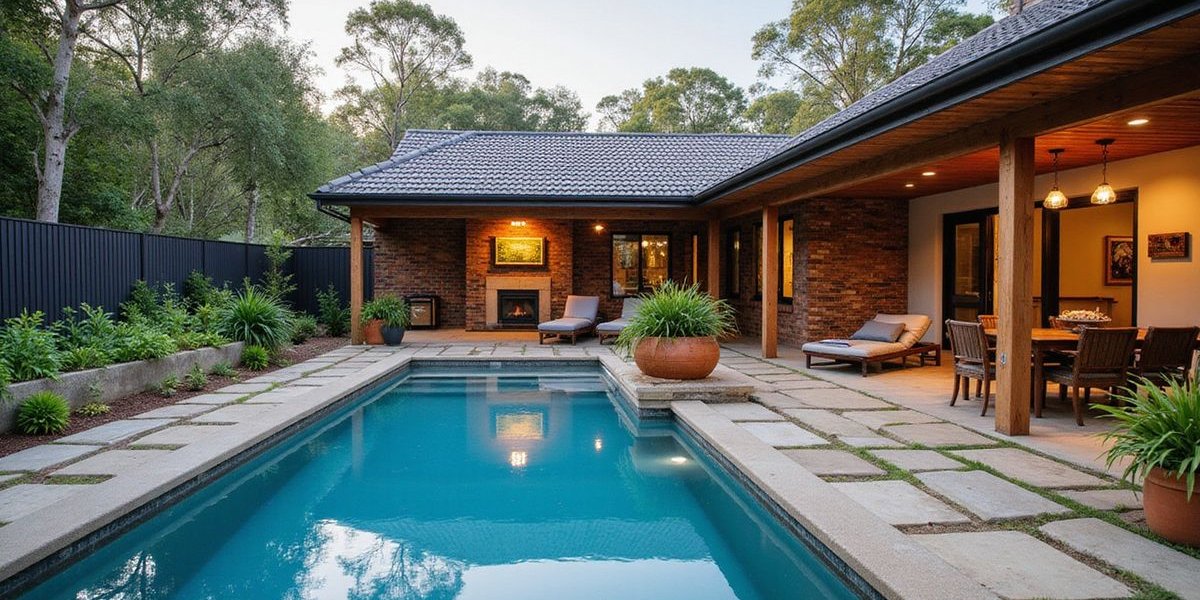
A pool without thoughtful landscaping is just a hole with water. The surrounding design transforms a pool into a destination – a resort-like retreat in your own backyard. This guide explores pool landscaping styles and considerations for Melbourne gardens.
Pool Landscaping Styles
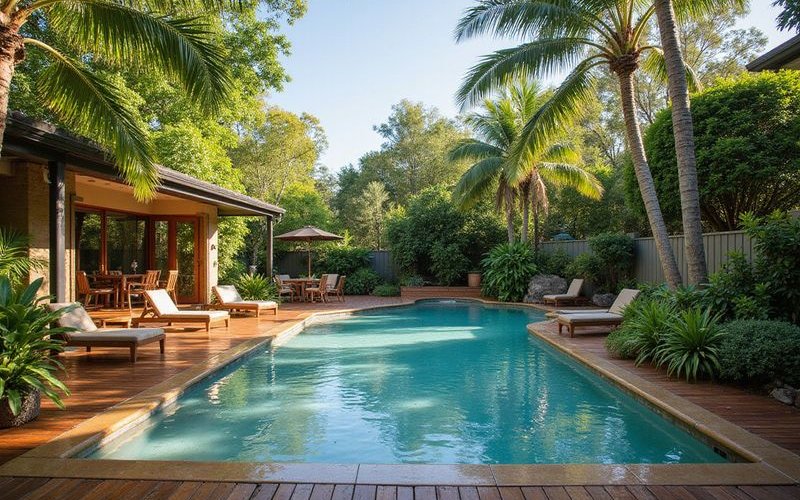
Tropical Resort
Lush foliage creates a private oasis reminiscent of Balinese or Thai resorts.
Key Elements:
- Dense, layered planting
- Large-leafed tropical species
- Timber decking
- Natural stone or crazy paving
- Water features and statuary
- Thatched or timber structures
Plants: Palms, bird of paradise, ginger, bromeliads, frangipani, cordyline
Considerations: Many tropical plants are frost-tender – choose hardy varieties for Melbourne or be prepared to protect plants in cold snaps.
Native Australian
Embraces indigenous plants and natural materials for a landscape that connects with the Australian bush.
Key Elements:
- Native grasses and groundcovers
- Indigenous trees for shade
- Natural stone and bush rock
- Muted, earthy colour palette
- Informal, relaxed feel
- Often complements bushland setting
Plants: Lomandra, dianella, westringia, grevillea, banksia, eucalyptus
Considerations: Perfect for bushfire-prone areas when designed with defendable space principles. Low water requirements suit Melbourne conditions.
Contemporary Minimalist
Clean lines and restrained planting create a sophisticated, architectural setting.
Key Elements:
- Limited plant palette
- Structured, geometric planting
- Large-format paving
- Neutral colour scheme
- Built-in furniture and planters
- Feature lighting
Plants: Agave, ornamental grasses, topiary, architectural feature plants
Considerations: Requires excellent construction quality – minimalist design shows every imperfection.
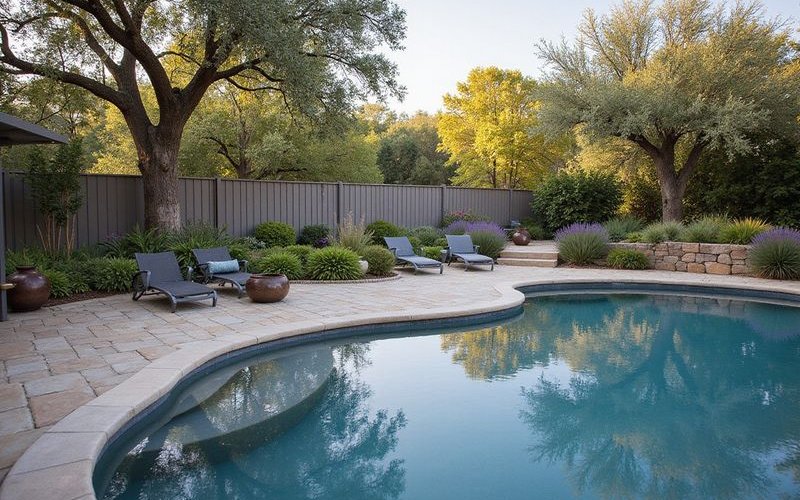
Mediterranean
Warm tones, drought-tolerant plants and relaxed elegance characterise this style.
Key Elements:
- Terracotta and warm stone
- Silver and grey-green foliage
- Lavender and rosemary
- Rustic timber elements
- Olives and citrus
- Terra cotta pots and urns
Plants: Olive trees, lavender, rosemary, bougainvillea, grape vines, agapanthus
Considerations: Suits Melbourne’s climate well. Creates a relaxed, holiday feel year-round.
Natural Swimming Pool
Combines swimming with biological water treatment and natural aesthetics.
Key Elements:
- Regeneration zone with aquatic plants
- Natural stone edging
- Bio-filter systems
- Native and water plants
- Informal, pond-like appearance
- Chemical-free water
Plants: Aquatic plants, water lilies, marginal plants, surrounding native planting
Considerations: More complex to install and maintain than conventional pools but creates a unique, environmentally-friendly feature.
Design Considerations
Orientation and Microclimate
Sun: Pools need sun for swimming comfort and warmth. North-facing orientations are ideal.
Wind: Wind shelter makes poolside areas more comfortable. Use planting, screens or structures for protection.
Privacy: Pool areas need screening from neighbours. Combine fencing with planting for attractive screening.
Pool Fencing Integration
Victoria requires compliant pool fencing. Design should integrate rather than fight this requirement:
- Glass fencing maintains views and light
- Planting can soften fence appearance
- Fence can define garden zones
- Consider gate placement for practical access
Material Selection
Paving: Choose materials that are:
- Non-slip when wet
- Comfortable to walk on barefoot
- Heat-resistant (light colours stay cooler)
- Durable and low-maintenance
- Complementary to pool coping
Options: Bluestone, sandstone, travertine, porcelain (check slip rating).
Drainage
Pool areas generate significant water from:
- Splashing and playing
- Filter backwash
- Rainwater runoff
- Overflow during heavy use
Design adequate drainage to handle this without creating boggy areas.
Plants for Pool Surrounds
What Works
Low-debris plants:
- Ornamental grasses (Miscanthus, Pennisetum)
- Strappy plants (Dianella, Lomandra)
- Compact shrubs (Westringia, Rosemary)
- Succulents and agaves
- Formal hedging (Murraya, Buxus)
Shade trees:
- Frangipani (minimal leaf drop)
- Magnolia (evergreen varieties)
- Olive (very little drop)
- Native figs (Ficus species)
What to Avoid
Messy plants:
- Deciduous trees over pool
- Fruiting trees
- Plants with berries
- Spiny plants near lounging areas
- Plants that attract bees when flowering
Invasive root systems:
- Bamboo (unless contained)
- Figs (near pool structure)
- Large eucalypts close to pool
Furniture and Features
Built-In Options
- Daybed platforms
- Bench seating along fence
- Planter boxes with seating
- Outdoor kitchen integration
- Fire pit areas
Shade Structures
- Poolside pergola
- Shade sails
- Umbrellas
- Pavilions and cabanas
Water Features
- Spillover spas
- Water walls
- Fountain features
- Scuppers into pool
Lighting
Pool lighting extends usable hours and creates atmosphere:
- Underwater pool lights (essential for safety)
- Uplighting on feature trees
- Path lighting around pool area
- Festoon or string lights for ambiance
- Feature lighting on structures
Budget Considerations
Pool landscaping typically costs $20,000-$80,000+ depending on:
- Pool size and surrounds area
- Material selections
- Complexity of planting
- Structures and features
- Site conditions
Quality landscaping significantly enhances the pool experience and property value.
Getting Professional Help
Pool landscaping benefits from professional design because:
- Pool companies focus on the pool, not surrounds
- Landscaping should be designed before pool construction
- Coordinated design creates better outcomes
- Plant selection for pool-specific conditions needs expertise
Ready to Create Your Pool Paradise?
The area around your pool is as important as the pool itself. Thoughtful design creates a cohesive outdoor living environment that you’ll enjoy for years.
Contact us to discuss pool landscaping for your Melbourne property.