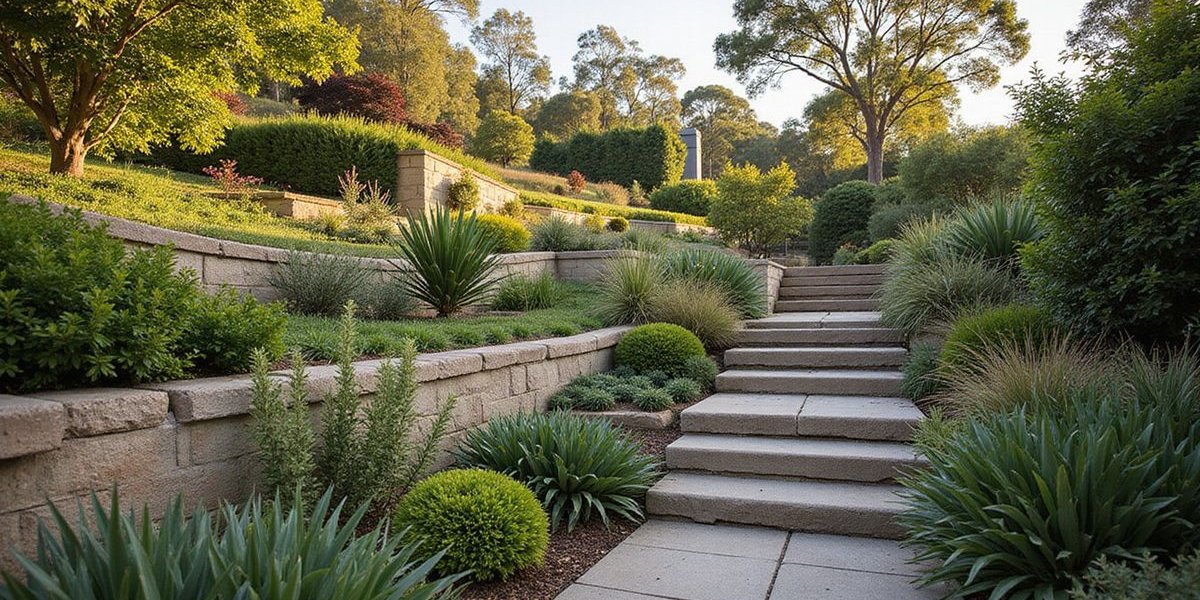
Melbourne’s north-eastern suburbs are blessed with beautiful hillside settings but challenging terrain. Landscaping a steep block requires specialist knowledge and careful planning, but the results can be spectacular. This guide covers everything you need to know about transforming a sloping site with professional landscape design.
Understanding Your Slope
Before diving into solutions, understand what you’re working with:
Gradient Classification
- Gentle slope (1:10 to 1:6): Manageable with simple terracing
- Moderate slope (1:6 to 1:4): Requires significant earthworks
- Steep slope (1:4 to 1:3): Needs engineered solutions
- Very steep (steeper than 1:3): Major engineering required
Site Assessment Essentials
- Survey showing existing levels and contours
- Geotechnical assessment for soil stability
- Drainage patterns and water flow
- Access constraints for construction equipment
- Existing vegetation, especially significant trees
Design Strategies for Slopes
Terracing
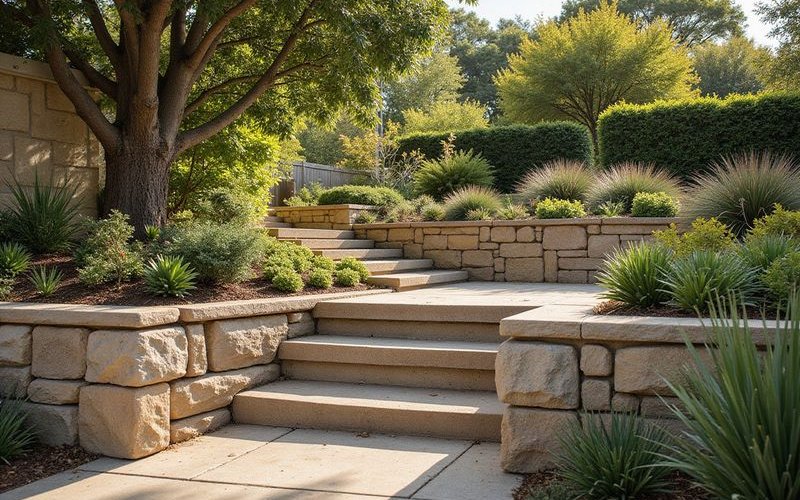
The most common approach to steep blocks, terracing creates a series of level areas connected by steps or ramps.
Advantages:
- Creates usable flat space
- Allows conventional planting and lawn
- Provides seating walls and garden beds
- Dramatic visual effect when done well
Considerations:
- Requires significant earthworks
- Retaining walls add cost
- Drainage between terraces is critical
- Access for maintenance needed
Working with the Slope
Sometimes the best approach is to embrace the slope rather than fight it:
Strategies:
- Sloping lawns (up to about 1:4 for mowing)
- Planted embankments with groundcovers
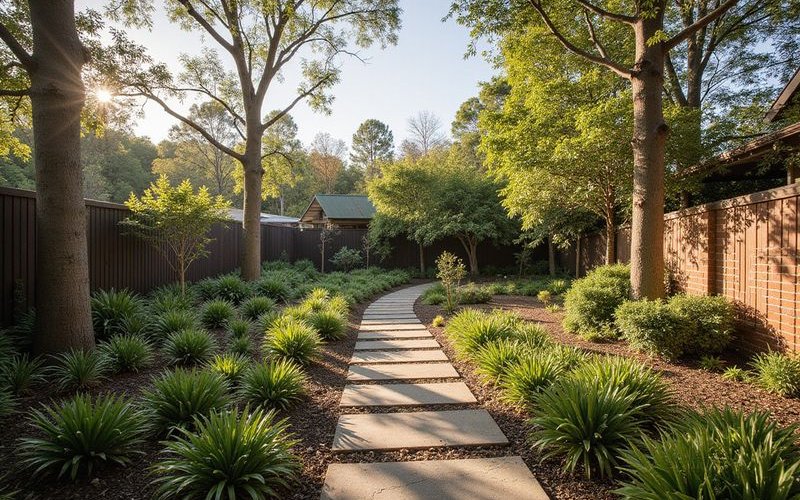
- Stepped paths following the contour
- Cascading water features
- Viewing platforms at key points
Best for:
- Larger properties where flat space isn’t essential
- Natural bush settings
- Budget-conscious projects
- Sites where minimal disturbance is desirable
Combination Approach
Most successful steep block designs combine terracing where flat space is needed (outdoor living, lawn areas) with planted slopes elsewhere. This balances functionality with cost efficiency.
Retaining Wall Options
Retaining walls are essential infrastructure on steep sites. Options include:
Timber Sleepers
Pros: Cost-effective, natural appearance, easy to work with Cons: Limited lifespan (15-25 years), height restrictions, not for wet areas Best for: Walls under 1m, bush settings, budget projects
Concrete Block Systems
Pros: Versatile, durable, can achieve height, various finishes Cons: Can look industrial, requires good construction Best for: Most residential applications, walls up to 2m
Stone Walls
Pros: Beautiful, timeless, integrate with planting Cons: Most expensive option, skilled labour required Best for: Premium projects, heritage properties, visible locations
Gabion Baskets
Pros: Contemporary look, permeable, can use site rock Cons: Industrial appearance doesn’t suit all gardens Best for: Modern designs, steep sites with loose rock
Engineering Requirements
Any retaining wall over 500mm typically requires engineering certification. This adds cost but ensures structural safety. Walls over 1m often need council permits.
Drainage – The Critical Factor
Poor drainage causes more steep block failures than any other factor. Water destabilises soil, undermines walls and kills plants.
Surface Drainage
- Swales to direct water around structures
- Pervious surfaces where possible
- Outlets at low points
- Rain gardens to slow and filter runoff
Subsurface Drainage
- Agricultural drains behind retaining walls (essential)
- Drainage aggregate layers
- Connection to stormwater system
- Appropriate pipe sizing for catchment
What Happens When Drainage Fails
Inadequate drainage can cause:
- Retaining wall collapse
- Erosion and soil movement
- Waterlogged planting areas
- Structural damage to buildings
- Dangerous slip conditions
Never economise on drainage infrastructure.
Planting Steep Sites
Ground Stabilisation Plants
On planted slopes, the right species prevent erosion:
Native options:
- Lomandra species (Mat Rush)
- Dianella species (Flax Lily)
- Myoporum parvifolium (Creeping Boobialla)
- Grevillea groundcover varieties
- Native grasses
Exotic options:
- Star Jasmine (Trachelospermum)
- Coastal Rosemary (Westringia)
- Pig Face (Carpobrotus)
- Sedum varieties
Establishment Period
New plantings on slopes are vulnerable until established. Consider:
- Erosion matting during establishment
- Irrigation to promote root growth
- Staged planting if budget is limited
- Temporary hydroseeding for rapid cover
Access and Circulation
Moving around a steep garden requires thought:
Steps
- Comfortable riser height (150-175mm)
- Generous treads (300mm minimum)
- Landings every 10-12 risers
- Handrails where required
- Non-slip surfaces
- Lighting for evening use
Ramps
- Maximum gradient 1:14 for accessible ramps
- Cross-fall for drainage
- Non-slip surface essential
- Flat landings at regular intervals
Informal Paths
- Stepped paths can follow contours
- Timber or stone stepping stones
- Mulched paths in bush settings
Construction Access
A major challenge on steep blocks is getting materials and equipment to where they’re needed:
Planning Considerations
- Can excavators access the site?
- Where will materials be stockpiled?
- Is crane access required?
- Temporary access tracks may be needed
- Some materials may require hand handling
Cost Implications
Difficult access significantly increases construction costs. Factor in:
- Extended project duration
- Specialised equipment hire
- Additional labour for manual handling
- Possible temporary works
Cost Expectations
Steep block landscaping costs more than flat sites. Budget for:
- Design and engineering: 15-20% more than flat sites due to complexity
- Earthworks: Major cost item – site-specific pricing essential
- Retaining walls: $400-$1,500+ per linear metre depending on type and height
- Drainage: Allow 10-15% of total budget
- Construction access: Can add 15-25% to labour costs
For a moderate-sized steep block (400sqm), expect $80,000-$200,000 for comprehensive landscaping. Complex sites with extensive engineering can exceed this significantly.
Working with Professionals
Steep block landscaping requires specialist expertise:
Essential Professional Services
- Surveyor: Accurate level information is essential
- Geotechnical engineer: For significant sites
- Structural engineer: For retaining walls over 500mm
- Landscape designer: Experienced with steep sites
- Specialist landscaper: Not all landscapers work on slopes
Getting Quotes
Steep block quotes vary wildly. Ensure all quotes include:
- Engineering and certification
- Complete drainage specification
- Specific wall heights and materials
- Establishment irrigation
- Access and site management
Ready to Transform Your Steep Block?
While steep blocks present challenges, they also offer opportunities for dramatic, memorable gardens. The views, the micro-climates, the opportunity for creative design – these make steep sites special.
Contact us to discuss your steep block project. We have extensive experience with sloping sites across Melbourne’s hills.