If you’re planning a garden project in Melbourne, you’ve probably encountered both landscape designers and landscapers. While the terms sound similar, they describe quite different services. Understanding the distinction helps you engage the right professionals for your landscape design project.
The Simple Explanation
Landscape designers create the plan. Landscapers build it.
Think of it like building a house: you’d engage an architect to design the building, then a builder to construct it. The same relationship exists between landscape designers and landscapers.
What Landscape Designers Do
Landscape designers are creative professionals who plan outdoor spaces. Their work includes:
Site Analysis
Before putting pen to paper, designers assess your site conditions – soil type, drainage patterns, sun exposure, existing vegetation, views and microclimates. This analysis informs every design decision.
Design Development
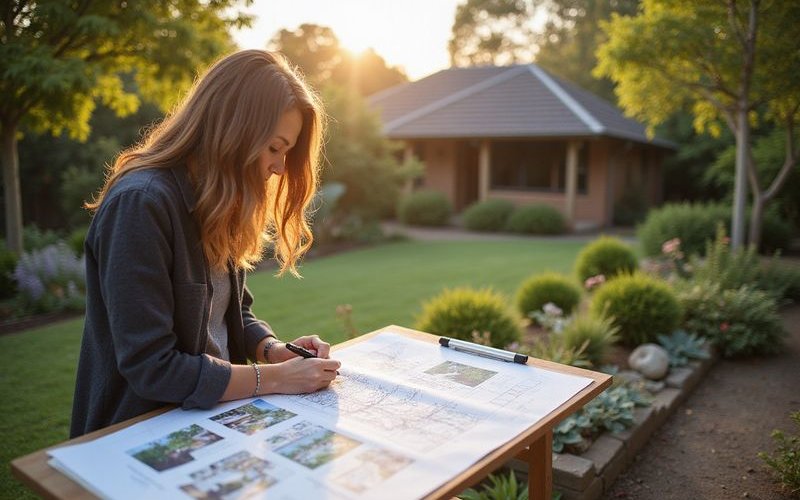
Designers create detailed plans showing how your garden will be laid out. This includes paths, patios, garden beds, lawn areas, water features, structures and planting areas. Good design considers how spaces flow together and how you’ll actually use the garden.
Plant Selection
Choosing the right plants requires understanding growing conditions, mature sizes, seasonal characteristics and maintenance requirements. Designers specify plants that suit your site and create the aesthetic you’re seeking.
Material Specification
From paving stones to timber for decking, designers specify appropriate materials that work aesthetically and practically for your conditions and budget.
Documentation
Designers produce drawings and specifications that communicate the design intent to landscapers, enabling accurate quoting and construction.
What Landscapers Do
Landscapers are construction professionals who build gardens. Their work includes:
Site Preparation
Clearing existing vegetation, removing debris, excavating for level changes and preparing the site for construction.
Hardscaping
Building the structural elements – paving, decking, retaining walls, fences, pergolas and other structures.
Softscaping
Installing garden beds, laying lawn, planting trees, shrubs and groundcovers, and setting up irrigation systems.
Project Management
Coordinating trades, managing materials and ensuring the project progresses efficiently.
When You Need a Designer
Consider engaging a landscape designer when:
- You want a cohesive design rather than ad-hoc improvements
- Your site has challenges like steep slopes, drainage issues or mature trees to work around
- You’re investing significantly and want to maximise the value
- You want competitive quotes from multiple landscapers working to the same brief
- Council approval is required for structures, tree removal or overlays
- You need a staged plan to implement over time
When You Can Go Straight to a Landscaper
You might work directly with a landscaper for:
- Simple projects like replacing a lawn or adding a garden bed
- Like-for-like replacements such as a new fence or repaving
- Minor improvements where design complexity is low
- Maintenance work including pruning, mulching and replanting
Many quality landscapers offer basic design services suitable for straightforward projects. Just be clear about what’s included.
The Design-Build Approach
Some companies offer both design and construction services under one roof. This can work well when:
- The project is relatively straightforward
- You value single-point responsibility
- Speed is a priority
However, there’s value in separating design from construction:
- Independent designers focus purely on your interests
- Competitive tendering can reduce construction costs
- Design choices aren’t influenced by construction margins
Landscape Architects vs Landscape Designers
You might also encounter landscape architects. The distinction:
- Landscape architects hold a university degree (typically 4-5 years) and are registered professionals. They’re qualified for complex public projects, major developments and detailed engineering.
- Landscape designers typically have diploma or certificate qualifications. They specialise in residential garden design and smaller commercial projects.
For most residential garden projects, a skilled landscape designer provides excellent value. Landscape architects are better suited to complex developments, public spaces or projects requiring engineering certification.
Getting the Best Results
For optimal outcomes on significant garden projects:
- Engage a designer first to create a comprehensive plan
- Use the design to obtain quotes from multiple landscapers
- Select a landscaper based on quality, references and value
- Have the designer review construction progress at key stages
This approach ensures you get a well-designed garden built to specification.
Questions to Ask
When engaging a landscape designer:
- What qualifications and experience do you have?
- Can I see examples of similar projects?
- What level of documentation do you provide?
- Do you offer construction review services?
When engaging a landscaper:
- Are you licensed and insured?
- Can you provide references from recent projects?
- Will you work from my designer’s plans?
- What warranty do you offer on materials and workmanship?
The Bottom Line
Landscape designers and landscapers play complementary roles. For projects beyond basic maintenance, engaging a designer creates better outcomes, prevents expensive mistakes and often saves money overall. The design fee is a small percentage of total project cost but has an outsized impact on the result.
Ready to discuss your project? Contact us for a consultation to understand what design services would benefit your garden.