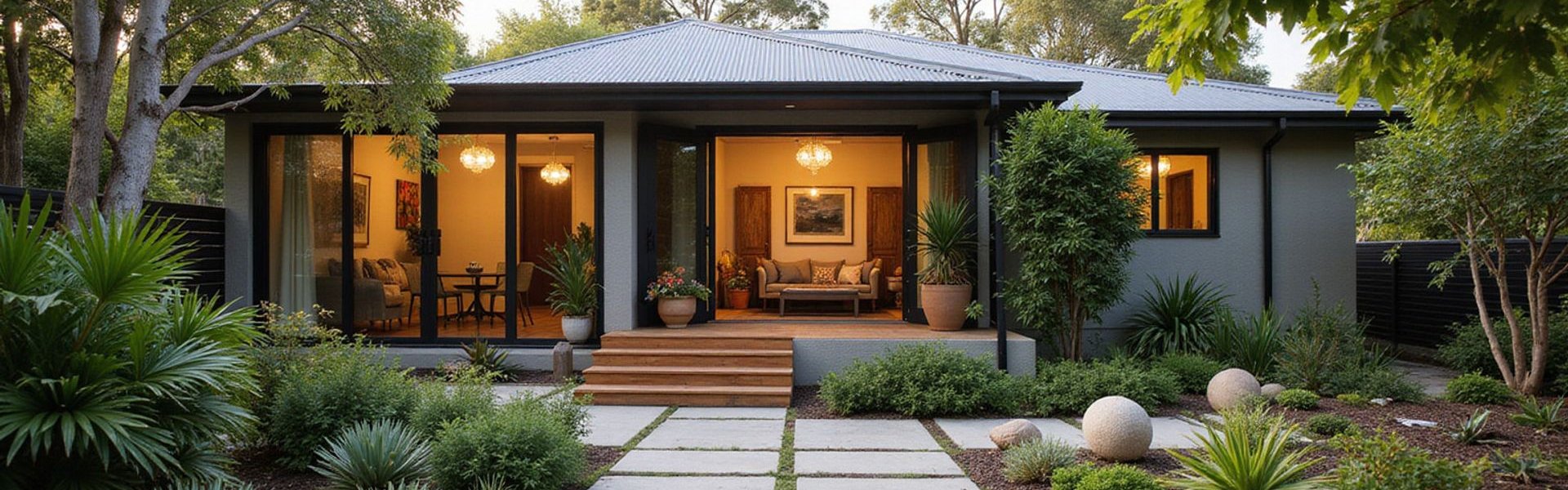
Good garden lighting extends the hours you can enjoy your outdoor space while adding security and beauty. Modern LED technology has made quality landscape design features more accessible and energy-efficient than ever. This guide explains your options.
Why Light Your Garden?
Extended Use
Lighting lets you enjoy your garden after dark – for entertaining, relaxing or simply admiring the view from inside.
Safety
Well-lit paths, steps and changes in level prevent accidents when navigating the garden at night.
Security
A lit garden deters intruders and makes your property more secure without harsh floodlighting.
Beauty
Night lighting transforms gardens, creating drama and highlighting features invisible during the day.
Types of Garden Lighting
Path Lighting
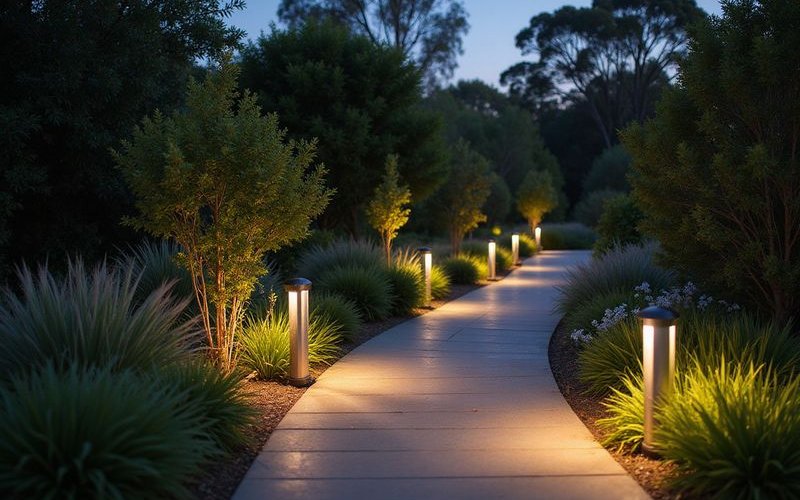
Purpose: Safe navigation along paths and through garden areas.
Options:
- Bollard lights (30-60cm high)
- Stake lights (ground-level)
- Recessed step lights
- Low wall-mounted lights
Tips:
- Space regularly (2-3m intervals)
- Light both edges of wide paths
- Lower is often better – avoid glare
- Illuminate steps clearly
Uplighting
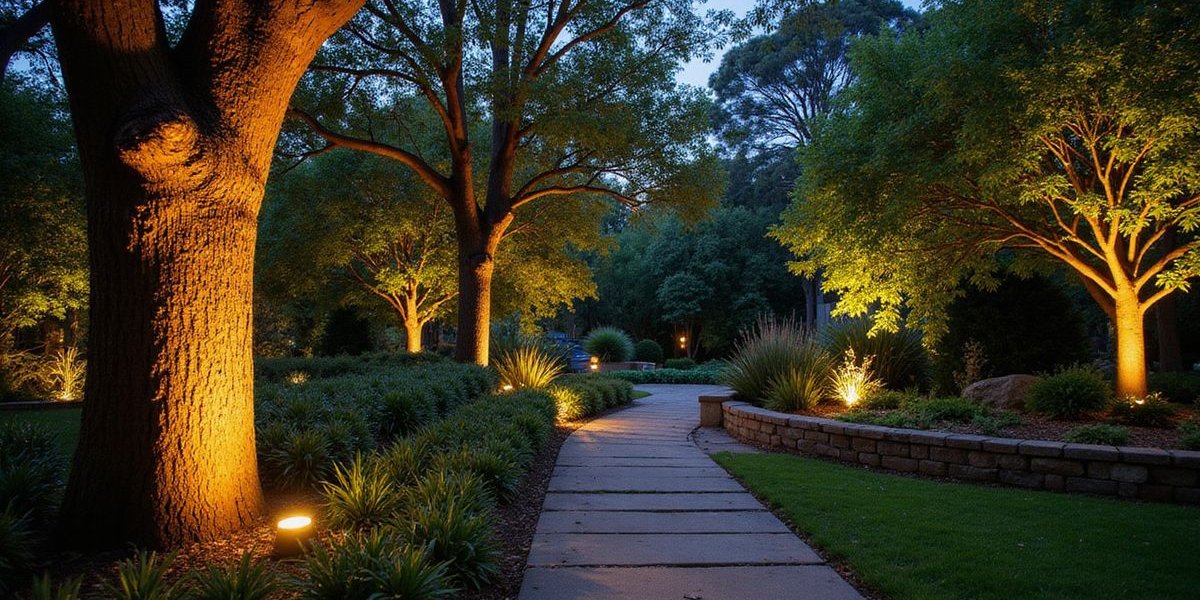
Purpose: Dramatic feature lighting from below.
Applications:
- Highlighting tree canopies
- Feature plants (agaves, grasses)
- Architectural elements
- Sculpture and ornaments
Tips:
- Position lights close to trunk/base
- Experiment with angles before fixing
- Consider what’s behind the feature
- Use narrow beam for tall trees
Downlighting
Purpose: Softer, more natural-looking illumination from above.
Applications:
- Moonlighting through tree canopies
- General area lighting
- Entertaining spaces
- Security lighting
Tips:
- Mount in trees or on structures
- Wide beam for general lighting
- Narrow beam for highlights
- Avoid shining into neighbour’s property
Feature Lighting
Purpose: Highlighting focal points and special elements.
Applications:
- Water features and pools
- Garden art and sculpture
- Specimen plants
- Built features (walls, pergolas)
Tips:
- Less is more – select key features
- Consider colour temperature
- Underwater lights for pools/ponds
- Silhouette lighting creates drama
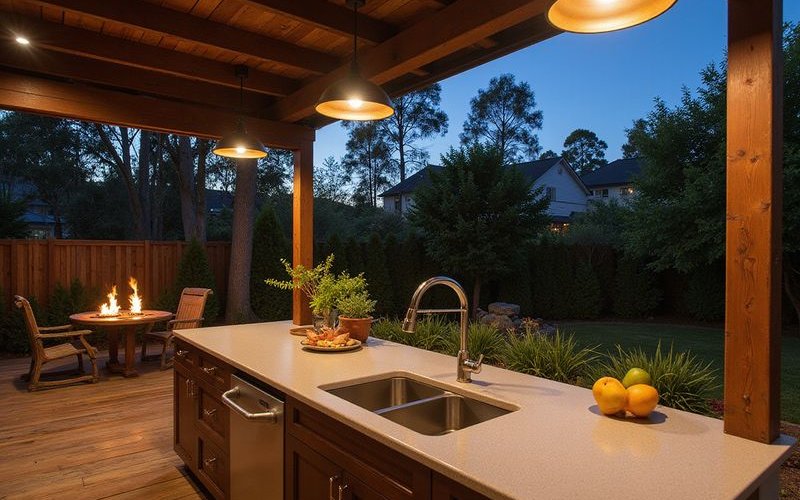
Functional Lighting
Purpose: Task lighting for specific activities.
Applications:
- Outdoor kitchens and BBQ areas
- Dining spaces
- Garage and shed approaches
- Address numbers
Tips:
- Brighter than ambient garden lighting
- Avoid harsh shadows on work surfaces
- Dimmable for flexibility
- Position to avoid glare while working
LED Technology
Modern garden lighting uses LEDs almost exclusively. Here’s what to know:
Advantages of LED
- Very energy efficient (75-80% less power than halogen)
- Long lifespan (20,000-50,000 hours)
- Low heat output
- Compact fixtures
- Available in various colour temperatures
- Instant on/off
Colour Temperature
Measured in Kelvin (K):
- Warm white (2700-3000K): Most common for gardens, creates cosy ambiance
- Neutral white (3500-4000K): Crisp but still pleasant
- Cool white (5000-6000K): Very bright, can look clinical
- Colour-changing (RGB): For special effects, usually too dramatic for everyday
Brightness
Measured in lumens:
- Path lights: 100-200 lumens
- Uplights: 200-400 lumens
- Feature lights: variable depending on effect
- Area lighting: 400-800 lumens
Power Options
Low Voltage (12V/24V)
Most residential garden lighting uses low voltage:
Advantages:
- Safe to install and modify
- No electrical license needed for lights (transformer requires electrician)
- Components readily available
- Easy to reposition
Considerations:
- Voltage drop over long runs
- Need quality transformer
- Limited power for high-output fixtures
Mains Voltage (240V)
Sometimes necessary for:
- Very long cable runs
- High-power fixtures
- Integration with house systems
Requires: Licensed electrician for all work
Solar
Best for:
- Locations far from power
- Low-priority accent lighting
- Budget applications
Limitations:
- Inconsistent performance
- Limited brightness
- Shorter lifespan
- Need sun exposure for charging
Smart Controls
Modern lighting systems offer sophisticated control:
Timers
- Basic on/off scheduling
- Astronomical timers adjust for season
- Multiple zones possible
Sensors
- Motion detection for security
- Dawn/dusk automation
- Occupancy sensing
Smart Systems
- Phone/tablet control
- Voice control integration
- Scene presets
- Remote access
- Integration with other smart home systems
Design Principles
Layer Your Lighting
Combine different types for depth and interest:
- Path lighting for safety base layer
- Uplighting for vertical interest
- Feature lighting for drama
- Area lighting for function
Avoid Over-Lighting
More isn’t better. Subtle lighting is more effective than blazing brightness.
Consider Views from Inside
The garden at night should look good from your living spaces.
Hide the Source
You want to see the effect, not the fixture. Use shrouding, positioning and planting to conceal lights.
Think About Glare
Position lights so you’re not looking into them from seats, paths or windows.
Installation Considerations
Planning
- Design lighting with garden design
- Run cables during construction
- Allow for future additions
- Consider maintenance access
Cable Routes
- Underground cables in conduit
- Avoid root zones of major trees
- Allow for garden evolution
- Document cable locations
Transformer Location
- Weatherproof housing
- Accessible for maintenance
- Adequate capacity (allow 20% spare)
- Protected from sprinkler spray
Budget Guide
For a typical Melbourne residential garden:
- Basic (paths and entry): $2,000-$5,000
- Mid-range (plus uplighting): $5,000-$10,000
- Comprehensive (full design): $10,000-$20,000+
Quality fixtures cost more but last longer and perform better.
Getting It Right
Garden lighting is easy to do poorly but transformative when done well. Professional design ensures you get the most from your investment and creates a garden that’s beautiful after dark.
Contact us to discuss garden lighting as part of your landscape design.