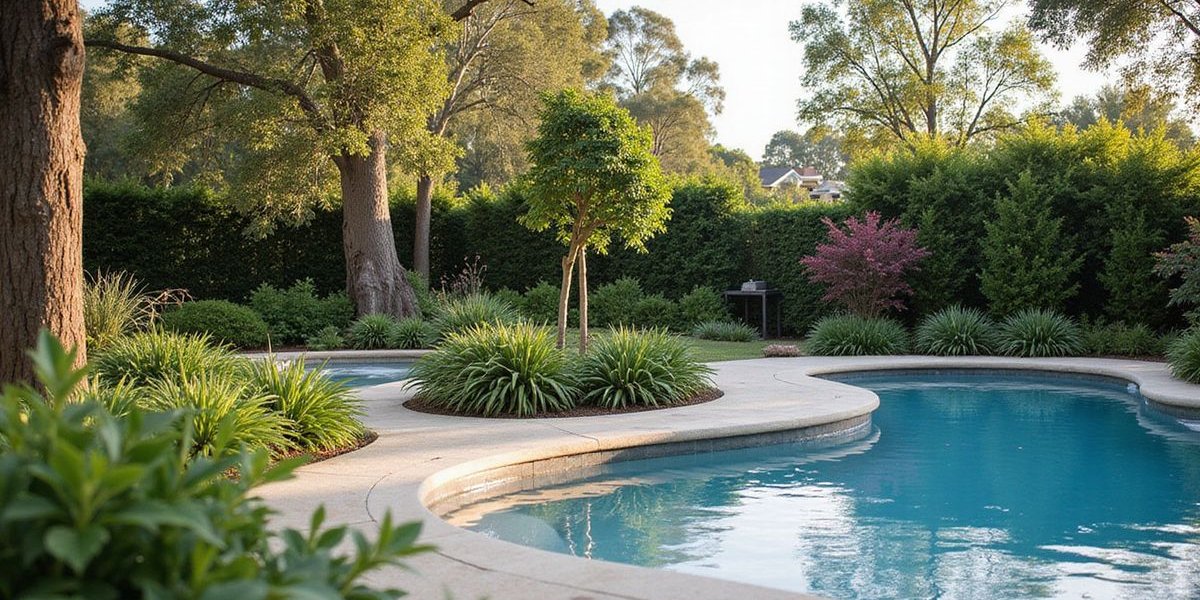
Choosing plants for pool landscaping requires careful thought. The wrong choices create ongoing maintenance headaches, while the right plants enhance your pool environment without causing problems. Here’s what works and what to avoid in Melbourne.
What Makes a Good Pool Plant?
Low Leaf Drop
Leaves in the pool mean more cleaning and can clog filters. Choose plants that don’t drop leaves frequently or all at once.
No Mess
Avoid plants that drop:
- Flowers that rot in water
- Berries or fruit
- Sticky sap
- Seeds or pods
- Bark
Non-Invasive Roots
Aggressive roots can:
- Damage pool structure
- Block drainage
- Lift paving
- Invade planting beds
Low Maintenance
Pool areas should be for relaxing, not garden work. Choose plants that need minimal attention.
Appropriate Scale
Plants should frame the pool without overwhelming it. Consider mature size and spread.
Recommended Strappy Plants
These linear-leaved plants are ideal for pool surrounds:
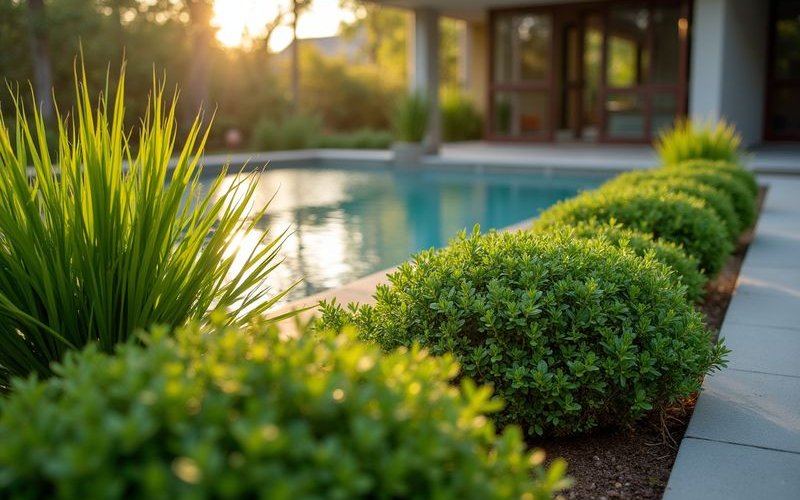
Lomandra
Varieties: Lomandra longifolia, L. ‘Tanika’, L. ‘Nyalla’
Why it works:
- Extremely tough and drought-tolerant
- Minimal leaf drop
- Tidy clumping habit
- Native and low-maintenance
- Attractive year-round
Best for: Mass planting, borders, structural element
Dianella
Varieties: Dianella caerulea, D. tasmanica, D. ‘Little Rev’
Why it works:
- Blue-green foliage
- Attractive blue berries
- Very low maintenance
- Native species available
- Tolerates shade
Best for: Understorey planting, shaded areas, mixed borders
Agapanthus
Varieties: Agapanthus ‘Queen Mum’, A. ‘Storm Cloud’, A. ‘Black Pantha’
Why it works:
- Spectacular flower display
- Drought-tolerant once established
- Tidy clumping habit
- Available in various sizes
- Minimal mess
Best for: Feature planting, borders, mass display
Recommended Shrubs
Westringia
Varieties: Westringia fruticosa, W. ‘Smokey’, W. ‘Grey Box’
Why it works:
- Naturally neat habit
- Salt and drought-tolerant
- Minimal drop
- Easy to prune if needed
- Native species
Best for: Hedging, screens, borders
Rosemary
Why it works:
- Aromatic foliage
- Very drought-tolerant
- Mediterranean aesthetic
- Culinary bonus
- Tough and forgiving
Best for: Informal hedges, rocky areas, Mediterranean schemes
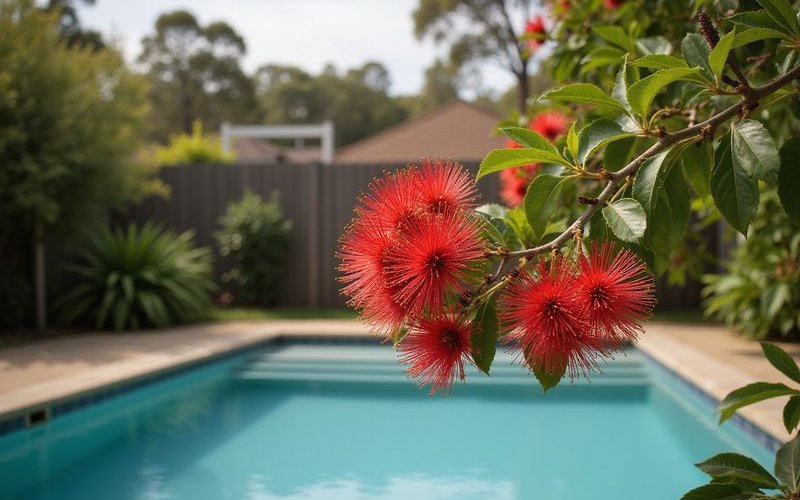
Callistemon (Bottlebrush)
Varieties: Callistemon ‘Little John’, C. ‘Captain Cook’
Why it works:
- Compact varieties available
- Bird-attracting flowers
- Native and drought-tolerant
- Minimal mess
- Hardy and adaptable
Best for: Screening, feature planting, native gardens
Recommended Trees
Frangipani
Why it works:
- Minimal leaf drop (deciduous but few leaves)
- Beautiful flowers (keep swept up)
- Compact form
- Tropical appearance
- No invasive roots
Best for: Tropical schemes, focal point, near pool
Olive
Varieties: Olea europaea (fruitless varieties available)
Why it works:
- Evergreen silvery foliage
- Extremely drought-tolerant
- Mediterranean feel
- Very little drop
- Long-lived
Best for: Shade, Mediterranean schemes, established look
Crepe Myrtle
Varieties: Lagerstroemia (various sizes)
Why it works:
- Spectacular summer flowers
- Smooth, decorative bark
- Deciduous (winter interest in bark)
- Available in many sizes
- Relatively tidy
Best for: Feature tree, shade, summer colour
Ornamental Grasses
Miscanthus
Varieties: Miscanthus sinensis varieties
Why it works:
- Dramatic movement and texture
- Evergreen in Melbourne
- Minimal maintenance
- No pest problems
- Soft appearance
Best for: Screening, movement, contemporary schemes
Pennisetum
Varieties: Pennisetum setaceum, P. ‘Rubrum’
Why it works:
- Soft, flowing habit
- Attractive flower heads
- Burgundy varieties available
- Drought-tolerant
- Provides texture contrast
Best for: Softening edges, borders, contemporary design
Succulents for Pool Areas
Agave
Why it works:
- Architectural form
- Extremely drought-tolerant
- No maintenance required
- Contemporary aesthetic
- Available in various sizes
Caution: Spiny edges – position away from traffic areas
Echeveria
Why it works:
- Beautiful rosette forms
- Range of colours
- Minimal water needs
- Ground-hugging
- Easy to maintain
Best for: Rock gardens, borders, planter boxes
Plants to Avoid
Large Deciduous Trees
Eucalyptus, oaks, maples – mass leaf drop overwhelms pools and filters.
Fruit Trees
Citrus, stone fruit, apple – dropped fruit attracts insects and creates mess.
Plants with Invasive Roots
Bamboo, fig, rubber trees – aggressive roots damage pool structures.
Plants That Attract Bees
Dense flowering plants near pool edges attract stinging insects.
Spiny Plants Near Traffic
Agaves, yuccas, roses – keep away from paths and lounging areas.
Plants That Drop Debris
Pine trees, jacaranda, liquidambar – constant mess in pool.
Planting Design Tips
Create Layers
- Canopy trees for shade (set back from pool)
- Screening shrubs for privacy
- Feature planting for visual interest
- Groundcover for finished appearance
Consider Maintenance
- Allow access for pruning and cleanup
- Avoid planting over pool equipment
- Keep planting back from water’s edge
- Plan for irrigation needs
Think About Views
- Frame views from house
- Screen unwanted views
- Consider views from the pool
- Create focal points
Maintenance Minimisation
Even with good plant choices, some maintenance is inevitable:
- Install leaf nets during autumn
- Keep plants well-mulched to reduce watering
- Trim overhanging branches regularly
- Clean pool skimmer daily in peak seasons
- Consider robot cleaner for ongoing maintenance
Ready for a Pool Garden?
The right plant selection makes the difference between a pool surround that’s a pleasure to maintain and one that’s a constant chore. Contact us to design poolside planting for your Melbourne garden.